Tank Battle in Stickman Party
Players who want a quick multiplayer battle in Stickman Party may find traditional tank games too complicated because of their controls, upgrades, and long matches. Tank Battle takes a simpler approach. It combines tanks, obstacles, power-ups, and one-hit eliminations into short rounds where positioning and timing matter.
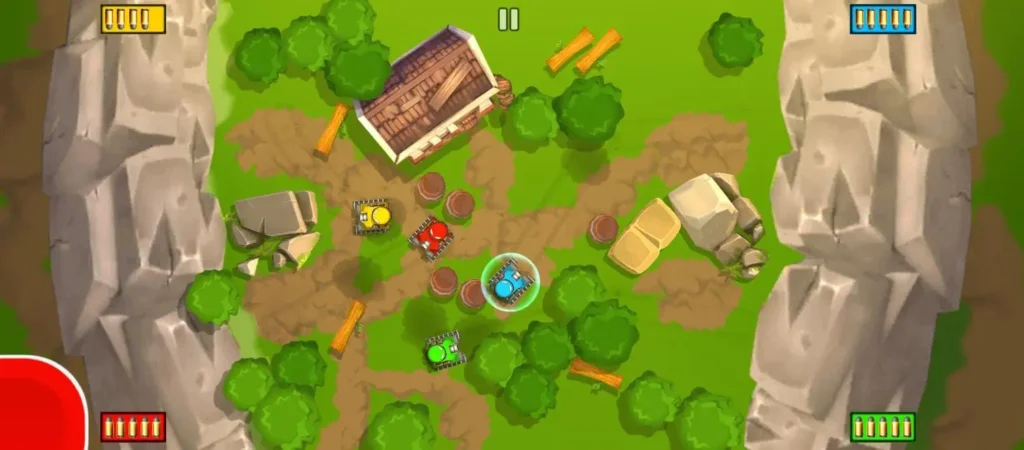
The solution is a simple arena battle that is easy to learn but still requires skill. Players control tanks, move around the map, avoid incoming shots, and look for the right moment to attack. Different arena layouts also change how players use cover, corners, walls, and open spaces.
About Tank Battle
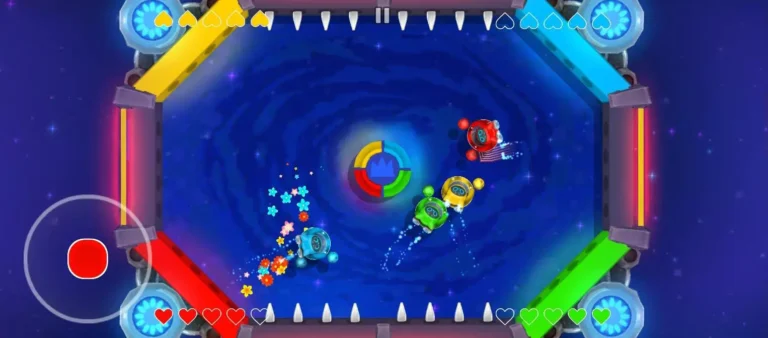
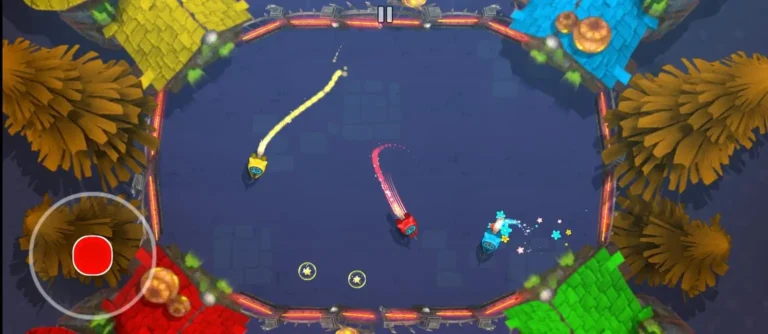
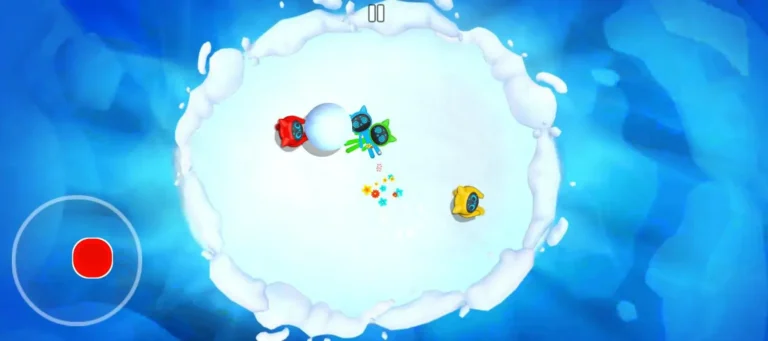
Tank Battle is a fast-paced multiplayer mini-game in the Stickman Party collection. The main objective is to eliminate opposing tanks while staying alive. Each round can change quickly because a single accurate shot can decide the result.
The controls are designed to stay simple. Players can move their tank around the arena and fire at opponents. There is no complicated upgrade system during a normal round. This puts more focus on player movement, aiming, reaction time, and map awareness.
The game can become especially competitive when several players share the same arena. Players need to watch their opponents while also finding safe positions. A player who attacks too quickly can expose their tank to a counterattack.
Power-Ups and Their Impact
Power-ups can appear during Tank Battle rounds and provide temporary advantages. Using them at the right time can be more useful than collecting them immediately.
Shield Power-Up
The Shield power-up provides temporary protection from an incoming hit. This can give players extra confidence when moving through an open area or challenging an opponent.
Timing is important. Using the shield when no enemy is nearby may waste its advantage. Saving it for an important attack or dangerous position can provide greater value.
Speed and Quick-Shot Boost
The Speed or Quick-Shot boost improves the tank’s movement and firing ability for a limited period. Faster movement can help players escape dangerous situations, while quicker firing can create pressure on opponents.
This boost works well during an aggressive push. However, players should still pay attention to their surroundings because moving quickly does not guarantee safety.
Map Variety and Strategic Layers
Map design is one of the most important parts of Tank Battle. Walls and obstacles affect movement, visibility, shooting angles, and defensive positions.
Different layouts require different approaches. Open arenas favor quick reactions, while maze-like maps reward patience and careful positioning.
1. Rectangular Maze
The Rectangular Maze contains long blocks that create narrow routes across a larger arena. These barriers provide useful cover from direct shots.
Players can move behind the blocks and wait for an opening. Flanking can also work well because opponents may focus on the main path.
2. Central Block Arena
This arena has a large obstacle in the center. Players can move around it while trying to predict where opponents will appear.
The central block creates a constant balance between attack and defense. Staying too close to the obstacle can limit movement, while moving too far away can leave a tank exposed.
3. Four-Quadrant Grid
The Four-Quadrant Grid divides the arena with thick walls and narrow openings. This makes shooting angles especially important.
Players need to watch the gaps between sections and avoid exposing their tank unnecessarily. Patience can be more effective than rushing toward an opponent.
4. Open Center and Corner Bunkers
This map provides a large open area with cover around the corners. Players have plenty of room to move, but they are also easier to spot.
Quick reactions are important here. Players should keep moving when crossing the open center and use corner cover when they need a safer position.
5. Scattered Blocks
Scattered Blocks fills the arena with smaller obstacles. These objects create many short paths and hiding points.
The map can become unpredictable because opponents may appear from different directions. Players should avoid staying in one position for too long and remain aware of possible firing angles.
6. Minimal Obstacle Arena
This map has very little cover. As a result, movement and reaction speed become more important.
There are fewer places to hide, so players need to predict enemy shots and keep their tanks moving. Accurate timing can make a major difference in this type of arena.
7. Symmetrical Corridor Maze
The Symmetrical Corridor Maze uses narrow paths and thick walls to create a maze-like battlefield. Players often need to wait for an opponent to enter their line of fire.
The limited space makes careless movement risky. Learning the corridors and understanding where an opponent may appear can help players control the battle.
8. Small Central Plus-Sign Arena
This small arena has a plus-shaped obstacle near the center. The structure creates several corners that players can use for temporary cover.
Because the map is compact, encounters can happen very quickly. Players should be ready to move or fire as soon as an opponent leaves cover.
9. Double Ring
The Double Ring map uses circular paths around an inner section. Players can choose between moving through the inner area or using the wider outer route.
Controlling the inner section can provide useful access to different parts of the arena. However, the outer route gives players more room to reposition.
10. Diamond or Star-Shaped Center
This map uses angled obstacles in the center. These shapes can create unusual shooting angles and make movement less predictable.
Players who understand how shots interact with the obstacles can use the geometry to create unexpected attacks. It is a map where prediction is often more useful than simply firing as quickly as possible.
What Makes Tank Battle Special
Tank Battle stands out because it combines simple controls with different tactical situations. Players do not need to learn a complicated control system before joining a match.
The one-hit style also keeps every decision important. A careless move can end a round, while a well-timed shot can immediately change the situation. This creates tension without making the game difficult to understand.
The variety of maps adds another layer to the gameplay. A strategy that works in an open arena may not work in a narrow maze. Players must adjust their movement, shooting position, and defensive approach based on the environment.
Players who enjoy other fast-paced Stickman Party mini-games can also explore Soccer in Stickman Party. It offers a different type of multiplayer challenge based on movement, positioning, timing, and physics.
Tank Battle also works well for local multiplayer. Several players can compete in the same arena, making each round different depending on their movement and decisions.
Final Thoughts
Tank Battle in Stickman Party combines quick matches, simple controls, power-ups, and varied arena layouts. The one-hit combat system makes every shot important, while different maps encourage players to change their strategy.
Some arenas reward fast movement and accurate shooting. Others require patience, cover, and careful positioning. This variety keeps the mini-game interesting and gives players plenty of reasons to replay it.