
Stickman Party
MOD APK
Stickman Party Paintball Guide: Tips to Win Every Match
Stickman Party Paintball caught me off guard the first time I tried it. I figured I’d mess around for five minutes between regular levels, and then somehow forty minutes had gone by and I was still losing to people who clearly understood something I didn’t.
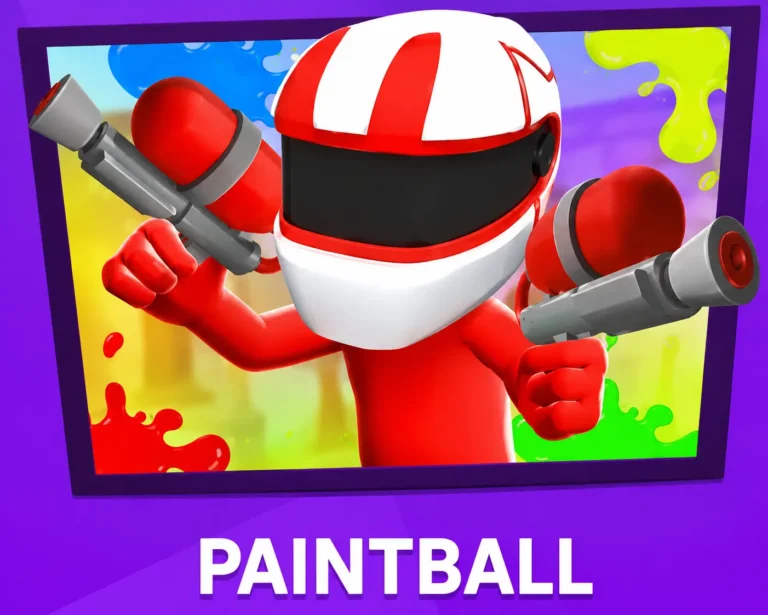
Maybe that’s you right now. Getting picked off in the opening seconds, fumbling with buttons that don’t do what you expect, wondering why this random mini-game feels harder than it has any right to be. You’re not missing something obvious — the mode just doesn’t explain itself well. So here’s everything I picked up the hard way, laid out so you don’t have to lose thirty matches to figure it out.
What This Mini-Game Actually Is
Forget the racing and button-mashing chaos from the rest of stickman mod apk for a second. This mode drops that entirely and hands you something closer to a real shooter — small arena, real aiming, real opponents trying to outplay you instead of some scripted AI pattern.
The Basic Idea Behind It
It plays like actual Stickman Party Paintball, minus any of the gore you’d expect from a shooter aimed at adults. Duck behind a crate, peek out, take your shot, get punished if you’re careless. That’s the loop. Sounds basic written out like that, but the first ten matches will humble you if you walk in expecting it to be mindless.
Why It's Worth Your Time
Rounds are short — that’s the big draw for me. You’re in and out in a couple of minutes, win or lose, which makes it dangerously easy to queue “just one more.” And because you’re fighting real players instead of predictable bots, every match feels a little different. That alone sets it apart from the rest of the game’s content, and it’s part of why Stickman Party online matches stay interesting even after dozens of rounds.
Getting the Mode Unlocked
I burned almost a week thinking something was broken before I realized I just hadn’t hit the right conditions yet.
- Your account usually needs to reach a certain progress point in the main game before paintball even appears as an option.
- Run an outdated version of the Stickman Party apk and it might not show up at all — updating fixed it for me instantly.
- Depending on which build you’re on, there’s sometimes a currency cost tied to unlocking it.
Checked all three and still nothing? Force-close the app completely and reopen it. Feels like a placebo fix, but it’s worked for me more than once, so don’t skip it.
Learning the Controls Without Getting Wrecked
Nobody explains these properly inside the app, which is exactly why so many players bounce off this mode within their first three matches.
Moving Around
There’s a joystick or D-pad, standard mobile shooter stuff, but the movement feels a touch looser than you’d expect. Give it a match or two before judging your own performance — half of what feels like bad aim early on is really just unfamiliar movement.
Actually Shooting Something
Some weapons want a single tap per shot. Others need you to hold the button down. I didn’t realize this distinction existed for my first several losses and kept tapping a weapon that was designed to be held — wasted a stupid amount of ammo figuring that out.
Rules Worth Knowing Upfront
- There’s a match timer, so playing slow and cautious the entire round isn’t really viable.
- Get hit and you’re either out for good or down a life, depending on which variant you land in.
- Team matches and free-for-all play very differently — don’t expect the same approach to work in both.
The Maps Matter More Than You'd Think
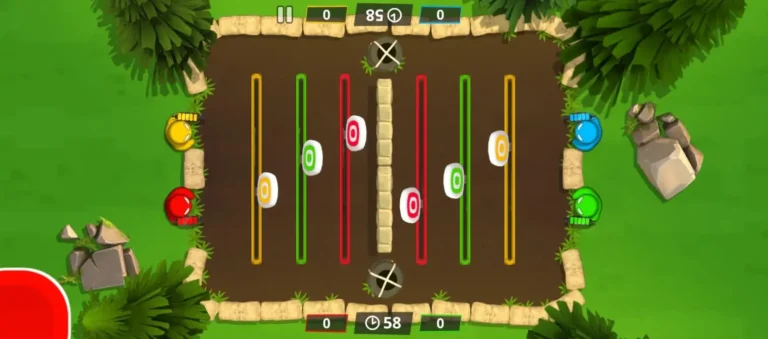
Small arenas, sure, but each one plays completely differently depending on layout.
Some maps are wide open with barely any cover, which rewards players who like to push aggressively and take risks. Others are stacked with crates and walls, better suited to a slower, more calculated style. Then you get the mixed layouts — open in some spots, tight in others — and those are genuinely the hardest to read because your strategy has to shift mid-match.
If you’re still learning the ropes, stick to cover-heavy maps for now. Open arenas will punish mistakes you haven’t even learned to avoid yet.
Picking the Right Weapon and Gear
Your weapon choice shapes the entire match, and grabbing whatever’s flashiest instead of what fits your playstyle is probably the fastest way to lose early.
Rapid-fire markers are fun in close quarters — chaotic, forgiving in short bursts — but hold the trigger too long and your accuracy falls apart fast. Single-shot precision weapons trade that speed for punishment potential; land your shots and careless opponents pay for it hard. There are also splash-radius weapons, which come in handy when someone’s tucked behind cover and a direct hit isn’t an option — a near-miss can still tag them.
I’ve settled into single-shot weapons once I know a map well enough. Rapid-fire options burn through ammo fast and leave you exposed mid-reload right when you need cover most.
Don’t sleep on gear either. Small movement speed boosts or faster reload perks look unimpressive on paper, but they’re often the difference between reaching cover in time and eating a shot in the open.
How to Actually Win Matches
This is where most guides get lazy. Let’s not do that.
Before the match even starts — glance at which map loaded. If you recognize it, you already know roughly where the good cover spots sit. Most players skip this entirely and just start running the second the round begins, which is a wasted advantage right out of the gate.
Once you’re moving — resist the urge to sprint toward the middle of the map. I did this constantly early on, thinking center control meant more kills. It didn’t. It made me the easiest target on the entire screen. Sticking closer to the edges lets other players fight each other first while you clean up whoever’s left standing.
Playing with a team — even the limited in-game communication tools matter more than people assume. If your teammate’s already pushing one flank, don’t follow them into the same lane. Split up and cover different angles — two players attacking from the same direction just means one lucky shot takes you both out.
Lining up your shots — don’t spray bullets hoping something connects. Take that extra split second to actually aim. Peek from cover, take your shot, retreat, repeat. And pay attention to what weapon your opponent’s using — knowing their reload timing tells you exactly when they’re vulnerable.
Mistakes I Made So You Don't Have To
Every single one of these cost me matches at some point.
- Standing in the open because I was too focused on lining up a shot to think about positioning.
- Reloading at the worst possible moment, usually right as someone rounded a corner toward me.
- Wandering off from my team thinking I could handle things solo — got outnumbered almost every time.
- Firing at nothing, just guessing someone might be behind a crate and wasting ammo confirming it.
- Freezing up under fire instead of immediately falling back to cover the second shots started landing near me.
Cut out even two or three of these habits and you’ll notice your win rate creep up fast. None of this requires some secret technique — it’s mostly just not handing free kills to the other side.
Tips for Players Who Want to Get Genuinely Good
Once the fundamentals stop feeling awkward, there’s a whole other layer to this mode.
Learn where fights actually happen on each map, not just where the cover sits. Every arena has a spot players naturally funnel toward — once you know it, you can either steer clear to survive longer or camp nearby and rack up eliminations, depending on how the match is going for you.
Reaction speed matters here in a way it doesn’t in bigger, slower shooters. Matches are short, so one hesitation can cost you the round. Practicing against weaker players first, just to sharpen how fast you react to seeing someone, pays off later against opponents who actually know what they’re doing.
And use cover to bait, not just hide. Peek out just enough to draw a shot, then duck back and let them waste it before you punish the gap in their timing. Small trick, but it works more often than it should — most players panic and fire the instant they spot movement.
What You Actually Get for Winning
There’s more to winning than bragging rights, though the bragging rights are nice too.
- Currency that carries over into the main game — easily the most practically useful reward.
- Cosmetic unlocks specific to Stickman Party Paintball mode, skins for characters and weapons mostly.
- Occasional temporary boosts that give you a slight edge heading into your next match.
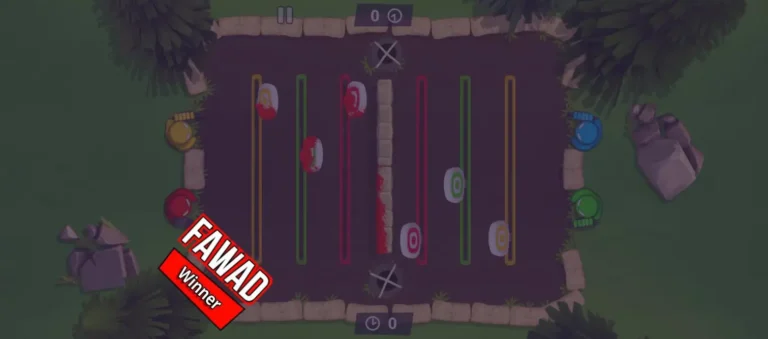
None of it’s life-changing on its own. But play this mode regularly and it adds up, giving matches a bit more weight beyond just the win itself.
Paintball Mode vs. Everything Else in Stickman Party
If you’ve spent time with the other 234 player games style modes inside the app, paintball is going to feel like a different beast entirely.
Most of the rest of the game leans on quick reflexes tied to simple inputs — timing a jump right, tapping fast enough, that kind of thing. Paintball asks more of you. You’re thinking about positioning, weapon choice, when to push and when to hold back. It takes longer to click, but once it does, your skill actually sticks with you match to match instead of resetting every round.
That depth cuts both ways, though. Younger players or anyone wanting something quick and mindless might bounce off this mode fast — it’s just not built for that. If low-effort fun is what you’re after, the racing or obstacle mini-games will probably suit you better. Paintball rewards people willing to actually practice.
Final Thoughts
Paintball isn’t the most polished or flashy mode in stick war legacy mod apk hack download, but there’s more depth here than most people give it credit for. Once the controls stop feeling foreign and you start actually thinking about positioning and weapon choice instead of just reacting, it becomes one of the more satisfying things to get good at in this game.
It’s not going to click in one sitting — I lost more matches than I care to admit before things started making sense — but the progress is real once you start applying even a handful of these tips. Give it a fair shot before writing it off. Chances are you’ll end up liking it a lot more than you expected to.
Questions Players Keep Asking
Is the paintball mode free?
Yeah, it’s included at no extra cost in most versions — though certain cosmetics or gear inside the mode might run you some in-game currency.
Where can I get Stickman Party download safely?
Stick to the official app store for your device. Third-party download sites often carry outdated or tampered files, and that’s more risk than it’s worth for a free game.
What weapon should beginners use?
Single-shot precision weapons are more forgiving to learn on since they don’t punish shaky aim as harshly as the rapid-fire options do.
How many people are in one match?
Depends on the mode — free-for-all rounds tend to be smaller groups, while team matches usually pack a few more players per side, similar to how other 1234 player games scale their lobbies.
Can I play alone, or is a team required?
Both exist. Free-for-all lets you go solo against everyone else, while team modes need a bit of cooperation to actually work.
I know the controls now, so why do I still keep losing?
Controls only get you halfway there. Positioning and patience matter just as much, if not more — that’s usually what’s holding people back once the basic mechanics stop being the problem.
Does it matter which map I get?
A lot, actually. Cover-heavy maps suit players who like to play patient, while open arenas favor aggression and fast reflexes.