Soccer in Stickman Party
Players looking for a simple football-style mini-game in Stickman Party may find traditional soccer games too complex because of their detailed controls, tactics, and long matches. The Soccer mini-game takes a different approach. It focuses on quick movement, collisions, timing, and physics, making each round easy to understand but difficult to predict.
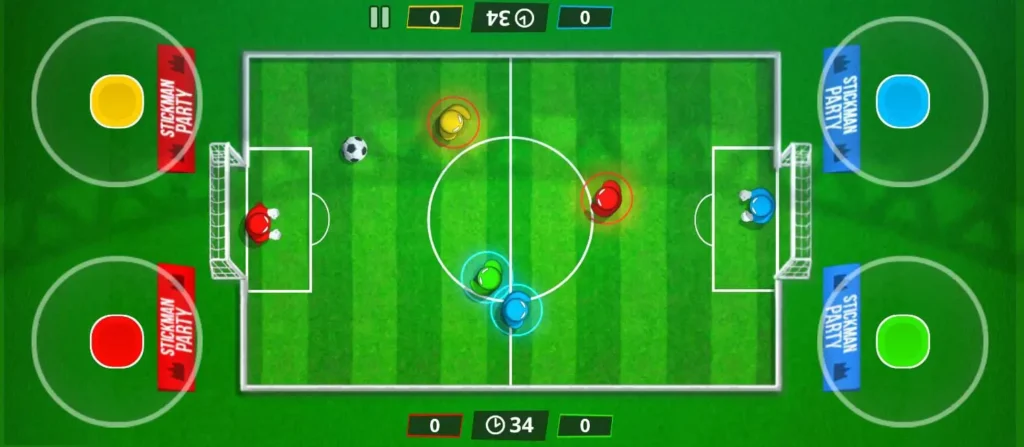
The solution is a simple top-down football experience where players control their stickman and use movement to push the ball. There are no separate buttons for shooting or passing. Players can compete in different team setups and use the environment to create scoring chances, making the game suitable for quick local multiplayer matches.
Gameplay Overview
The Soccer mini-game uses a top-down view and focuses on short, fast-paced matches. Players can compete in different team configurations, including 1v1, 2v2, 3v3, and 4v4 matches. The goal is straightforward: score more goals than the opposing team before the match ends.
Instead of using traditional football controls, players move directly into the ball to kick it. The direction and speed of movement affect how the ball travels. This creates unpredictable shots, rebounds, and defensive situations.
Teamwork can also make a difference in multiplayer matches. One player can focus on attacking while another stays near the goal. However, the simple physics can quickly change the situation when players collide or the ball takes an unexpected bounce.
Maps and Environments
The Soccer mini-game includes two different environments. Each map changes the way players move and control the ball.
Grass Field Map
The grass field is the more traditional soccer environment. It has a wide rectangular layout with goals positioned at opposite ends. The open space gives players more room to move, chase the ball, and create attacks.
Positioning is especially important on this map. Players can spread across the field instead of staying close to the ball. The wide goal area also means defenders need to watch the ball carefully and react quickly to incoming shots.
Swimming Pool Map
The swimming pool map gives Soccer a more unusual setting. The playing surface affects movement and makes the match feel less predictable than the standard grass field.
Players may have a harder time controlling their direction, while the ball can move in unexpected ways. This makes anticipation more important. Instead of reacting only after the ball moves, players need to predict where it may go next.
The two maps add variety without changing the basic rules. One provides a more familiar football setting, while the other focuses more on unpredictable movement and physics.
Controls and Physics
Soccer uses a minimal control system. Players mainly use directional controls to move their stickman around the field. There are no dedicated buttons for shooting, passing, or tackling.
To hit the ball, the player moves into it. The angle of approach influences the direction of the ball, while movement speed can affect how strongly it travels. This physics-based system creates different outcomes from similar situations.
The ball can bounce from walls and other players. A shot that looks safe can therefore change direction after a rebound. Learning these movement patterns helps players make better decisions during both attacks and defensive plays.
How to Win
Winning consistently requires more than simply chasing the ball. Good movement and positioning can create better scoring opportunities.
- Use angled shots: Approach the ball from different angles instead of always moving directly toward it. This gives you more control over its direction.
- Protect the goal: Stay between the ball and your goal when defending. A good position can block a shot before it becomes dangerous.
- Watch opponents: Pay attention to where other players are moving. Avoid unnecessary collisions and look for open areas of the field.
- Use the walls: Wall rebounds can change the ball’s direction. Learning how the ball behaves after hitting a boundary can help with attacks and defensive plays.
- Move with your team: In team matches, avoid having every player chase the ball. Spread out and cover important areas of the field.
Why It’s So Fun
The Soccer mini-game works because its rules are easy to learn while its physics create different results in every match. A normal attack can turn into a defensive scramble within seconds.
The unpredictable ball movement is also part of the fun. Players may miss a simple shot, collide with an opponent, or score after an unexpected rebound. These moments make local multiplayer matches more entertaining without requiring complicated controls. Players who enjoy fast-paced movement and quick reactions can also explore Stickman Run in Stickman Party, another mini-game focused on timing, movement, and obstacle awareness.
The grass and swimming pool environments also give players different movement experiences. Combined with short matches and team-based play, Soccer offers a quick mini-game that is easy to replay.
Final Thoughts
Soccer in the Stickman Party mini-games collection combines simple controls with physics-based football action. Players only need to understand movement and positioning, but mastering the ball takes practice. The two maps also provide different environments and movement challenges.
Whether playing a quick 1v1 match or a larger team battle, the focus remains on timing, positioning, and fast reactions. The simple rules make Soccer easy for beginners, while unpredictable rebounds and collisions keep experienced players engaged.