Stickman Run in Stickman Party
Players who try the Stickman Run mode in Stickman Party may find it challenging at first because the gameplay depends on quick movement, obstacle avoidance, accurate timing, and fast reactions. New players may need some practice to understand how the character moves, when to change direction, and how to respond to obstacles appearing along the route. Small mistakes can quickly affect progress, especially when several challenges appear close together.
The easiest way to improve is to learn the movement controls first and then focus on what is coming ahead rather than reacting at the last moment. Keeping your movements controlled, watching obstacle patterns, and practicing timing can make the mode easier to handle. This guide explains the main Stickman Party mod apk running gameplay, including movement mechanics, controls, obstacles, useful strategies, and common mistakes. It is designed to help players understand the mini-game and become more comfortable during both solo practice and multiplayer matches.
What Is Stickman Run in Stickman Party?
Basic Gameplay Concept
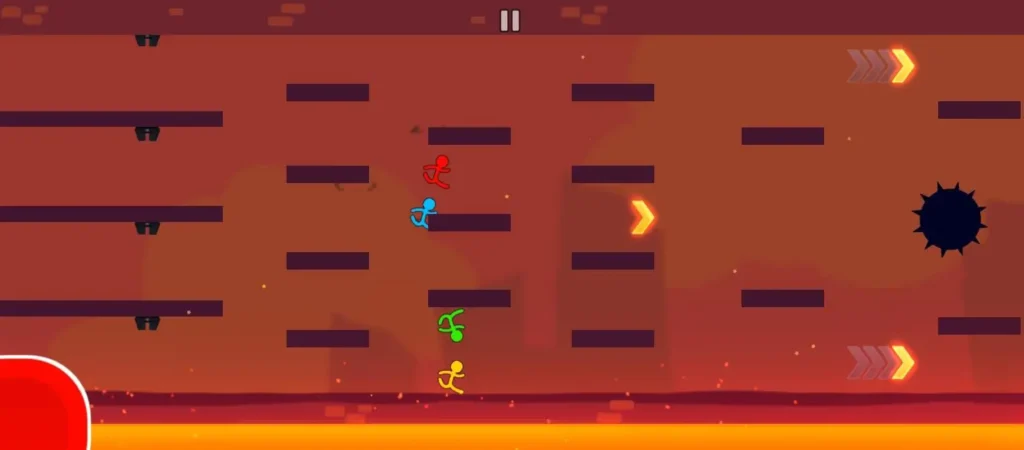
Stickman Run is a fast-paced running mini-game in Stickman Party where players move through a course while avoiding different obstacles. The main goal is to keep moving, react to upcoming challenges, and maintain progress without making mistakes. Good character movement and quick reactions are important for completing the course successfully.
Competitive Gameplay
The mode can become more challenging when multiple players compete at the same time. Players must focus on their own movement while also keeping track of others, making each race more competitive.
Why Timing Matters
Timing plays an important role during the run. Jumping, changing direction, or slowing down at the right moment can help players avoid obstacles and continue moving forward. Poor timing can quickly interrupt progress.
How the Running Gameplay Works
Starting the Match
When the round begins, players should focus on understanding the course and controlling their character. Avoid rushing forward without checking what is ahead.
Moving Through the Course
Players move through different sections of the level while adjusting their direction and movement according to the course layout. Smooth control helps maintain progress.
Avoiding Obstacles
Watching the course ahead is important because obstacles can appear quickly. Players who react only at the last second may have less time to avoid them. Observing patterns allows better timing.
Reaching the Finish
The final section still requires careful control. Instead of taking unnecessary risks, players should maintain steady movement and focus on reaching the finish without making avoidable mistakes.
Controls and Movement Mechanics
Understanding Directional Controls
Directional controls determine how the character moves and where it is positioned on the course. Players should learn how quickly the character responds to each movement input before attempting difficult sections.
Timing Jumps and Actions
Correct timing is important when approaching obstacles. Jumping or changing direction too early or too late can cause the character to lose progress. Watching the course helps players choose the right moment to act.
Maintaining Control
Unnecessary movement can make the character harder to control. Smooth and deliberate inputs are usually easier to manage than constantly changing direction.
Practice Makes Movement Easier
Short practice sessions can help players understand the control response. Repeating simple sections also builds confidence and makes movement feel more natural during longer runs.
Common Obstacles and Gameplay Challenges
Moving Obstacles
Moving obstacles can change the timing of each run. Players need quick reactions and should adjust their movement as obstacle patterns change.
Narrow Paths
Narrow paths leave less space for movement. Maintaining a steady position becomes important because small direction changes can cause mistakes.
Sudden Changes
Unexpected obstacles can appear during the course. Players who move without watching ahead may not have enough time to respond correctly.
Crowded Multiplayer Areas
In multiplayer matches, other players can make crowded sections harder to navigate. Staying focused on the course helps avoid unnecessary movement.
Repeated Attempts
Repeating a difficult section can help players recognize obstacle patterns and improve their timing. Each attempt provides a chance to understand what went wrong and adjust movement for the next run.
Best Strategies for Better Running Performance
Look Ahead Instead of Only Reacting
Watch the course ahead and identify upcoming obstacles before reaching them. This gives you more time to decide whether to jump, change direction, or continue straight.
Control Movement Carefully
Avoid unnecessary directional changes. Small, controlled movements make it easier to stay aligned with the course.
Learn Obstacle Patterns
Recurring layouts can become easier when you recognize their patterns. Knowing what usually comes next can improve reaction time and decision-making.
Keep a Consistent Pace
Rushing can lead to poorly timed actions. A steady pace gives you more control when approaching difficult sections.
Practice Difficult Sections
Focus on areas where mistakes happen most often. Repeating these sections helps you understand better movement choices.
Stay Calm During Multiplayer Rounds
Other players can create pressure, but panic often causes poor timing. Stay focused on your route and make decisions based on the course.
Stickman Run Multiplayer Gameplay
Playing Against Friends
Playing Stickman Run with friends can make the running game more competitive and unpredictable than playing alone. Each player must manage their own movement while trying to stay ahead. For a broader comparison of Stickman Party with another popular mobile game, check out Stickman Party vs Minecraft: Which Mobile Game Wins in 2026?.
Competition and Positioning
Speed is useful, but moving too quickly can cause mistakes. Players should balance progress with safe positioning, especially around obstacles and narrow sections.
Learning From Other Players
Watching another player’s route can reveal useful movement patterns. Their approach to an obstacle may show a safer direction or better timing for a difficult section.
Avoiding Unnecessary Competition
Trying to constantly interfere with another player can distract from the course. In many situations, focusing on your own route and making accurate movements is more effective than taking unnecessary risks.
Common Mistakes Players Should Avoid
Moving Too Quickly
Rushing through the course can cause players to miss important timing windows. Controlled movement gives more time to respond to obstacles.
Ignoring the Course
Players should watch the environment instead of focusing only on their character. Observing what comes next makes it easier to prepare for upcoming challenges.
Repeating the Same Mistake
After a failed attempt, identify what caused the mistake. Understanding whether timing, positioning, or movement was the problem can help improve the next run.
Overcorrecting Movement
Too many directional changes can make precise movement difficult. Simple and controlled inputs are often easier to manage.
Losing Focus Near the Finish
The final section still requires attention. Relaxing too early or taking unnecessary risks can turn a strong run into an avoidable mistake.
How to Improve Your Skills Over Time
Start With Control Familiarity
Begin by learning how the character responds to different inputs. Understanding movement speed and direction makes later challenges easier to manage.
Practice Timing
Focus on the timing of jumps and movements rather than simply trying to finish quickly. Good timing helps you handle obstacles with fewer mistakes.
Study Difficult Sections
Identify the parts of the course where mistakes happen repeatedly. Studying these areas can reveal patterns and improve decision-making.
Gradually Increase Challenge
Start with basic movement and simple obstacles before handling more complicated sequences. As your control improves, you can gradually take on harder sections with greater confidence.
Why Stickman Run Is Challenging but Fun
Simple Controls, Different Outcomes
Stickman Run uses straightforward controls, but small changes in timing or direction can produce very different results. This makes each obstacle require attention.
Quick Matches
Short rounds make the mode easy to play when players have limited time. Each match offers a focused challenge without requiring a long session.
Replay Value
Players can replay matches to understand mistakes, recognize obstacle patterns, and improve their movement. Familiar sections can become easier with better timing.
Multiplayer Fun
Playing with friends adds a social and competitive element. Players can compare their progress and routes while still focusing on their own movement and decisions.
How to Improve Your Skills Over Time
Start With Control Familiarity
Begin by learning how the character responds to different movement inputs. Understanding direction and movement speed makes the course easier to handle.
Practice Timing
Focus on when to jump, change direction, or adjust movement near obstacles. The goal is to improve timing rather than simply reaching the finish quickly.
Study Difficult Sections
Pay attention to sections where mistakes happen repeatedly. Identify the obstacle, movement, or timing issue causing the problem and adjust your approach.
Gradually Increase Challenge
Start with basic movement and simple obstacle sequences. Once these feel comfortable, move toward more complicated sections that require faster reactions and better control.
Frequently Asked Questions
Key Takeaways
Stickman Run combines movement, timing, obstacle awareness, and competitive play into a fast-paced mini-game. Players can improve by learning the controls, watching upcoming obstacles, recognizing patterns, and keeping their movements controlled. Analyzing mistakes also helps build better timing. In multiplayer rounds, competition adds another challenge as players manage their own route while keeping up with others.