Pie in the Face
Quick arcade games can become difficult when every move depends on timing and fast reactions. Pie in the Face keeps the controls simple, but the short rounds and changing obstacles make each throw important. A missed attack can give the other player enough time to respond.
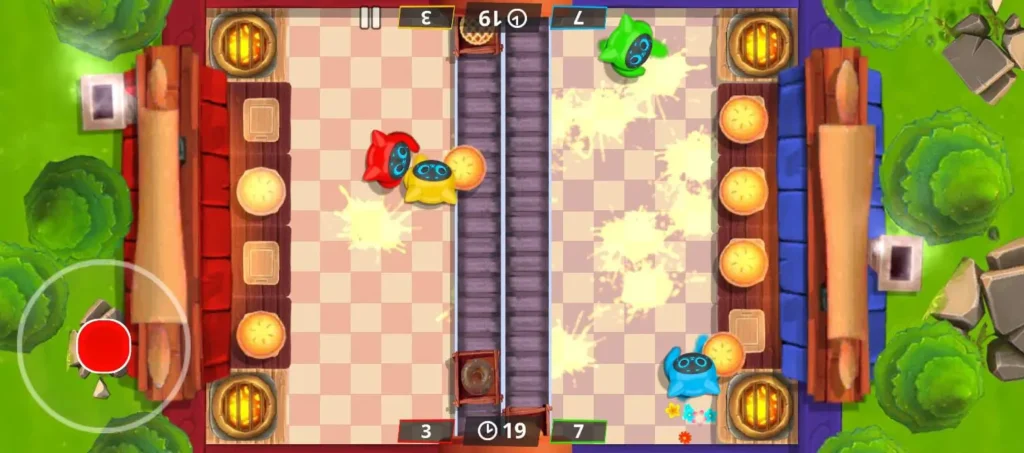
The best approach is to watch the map, understand the obstacle movement, and choose the right moment to throw. Instead of attacking randomly, focus on positioning, timing, and reading your opponent’s movement.
How Pie in the Face Works
Pie in the Face is a two-player Stickman Party mini-game built around quick attacks. Players stand on opposite sides of the arena and use pies as projectiles.
The main objective is to hit the other stickman while avoiding incoming pies. Each successful hit can help you gain an advantage during the round.
The game is easy to understand because it does not require complicated controls. However, good timing becomes important once both players start attacking and moving around the arena.
The short format also keeps the action moving. There is little downtime between attacks, so you need to stay focused from the beginning of the round until the timer ends.
For another game based on quick reactions, you can also explore Wild West.
Map Design and Layout
The arena design plays an important role in Pie in the Face. Players generally have space on opposite sides, while obstacles can appear between them.
These obstacles can change how players approach each throw. Instead of always having a clear path, you may need to wait for an opening or adjust your position.
Common map elements can include:
- Moving barriers that change the available throwing path
- Open gaps that create opportunities for direct attacks
- Blocks and surfaces that can affect projectile movement
- Protected areas where players can avoid direct attacks
- Narrow openings that require better timing
Learning the layout helps you recognize safe positions and possible attack routes.
Gameplay Style and Strategy
Pie in the Face looks simple, but several skills can make a difference during a match.
Timing
Timing is one of the most important parts of the game. Throwing too early can cause your attack to miss or hit an obstacle.
Watch the movement of the map and wait for a useful opening before attacking.
Positioning
Your position affects both attack and defense. Moving around can make it harder for your opponent to predict where you will be.
Avoid standing in the same location for too long, especially when the opponent is preparing an attack.
Observation
Do not focus only on your own character. Watch your opponent as well.
If they repeatedly attack at the same moment, you may be able to recognize the pattern and move before the next throw.
Reaction Speed
Fast reactions are useful when a pie is already moving toward you. A quick change in position can help you avoid an attack and create a chance for a counterattack.
How to Win More Matches
Winning consistently requires more than throwing pies as quickly as possible. Use the following strategies to improve your gameplay.
Watch the Obstacle Pattern
Before making repeated attacks, spend a moment watching how the obstacles move. Understanding their rhythm can help you identify better openings.
Attack at the Right Moment
Do not throw simply because a pie is available. Wait until your opponent is in a position where the attack has a clearer path.
A well-timed throw can be more useful than several rushed attempts.
Keep Moving
Standing still makes your movement easier to predict. Change your position when needed and avoid following the same movement pattern throughout the round.
Stay Away From Predictable Positions
If you always stand in the same area, your opponent can learn your position and time their attacks accordingly.
Move between safer areas and change your approach when the situation changes.
Use Obstacles Carefully
Obstacles can work as protection as well as barriers. Use them to reduce direct attack opportunities for your opponent, but remember that they can also block your own throws.
Stay Calm After a Miss
Missing an attack does not mean the round is lost. Avoid immediately throwing again without checking the situation.
Take a moment to read the opponent’s position and wait for a better opportunity.
Common Mistakes to Avoid
New players can make several simple mistakes during Pie in the Face.
- Throwing too quickly without checking the path
- Standing in one position for too long
- Ignoring moving obstacles
- Repeating the same attack pattern
- Focusing only on attacking
- Panicking after missing a throw
Avoiding these habits can make your gameplay more controlled and predictable for you, while making it harder for your opponent to read your next move.
Pie in the Face vs Other Stickman Party Games
Pie in the Face focuses heavily on timing, positioning, and quick reactions. Other mini-games use different mechanics and objectives.
For example, Magnets Mini Game focuses on collecting valuable items while managing your position around hazards. Pie in the Face is more focused on direct player interaction and accurately timing attacks.
This variety is one reason the Stickman Party collection offers different experiences for players who enjoy short local multiplayer challenges.
What Makes Pie in the Face Fun?
The appeal of Pie in the Face comes from its simple concept and unpredictable matches. The controls are easy to understand, but the combination of obstacles, movement, and timing gives experienced players more room to improve.
Every round can develop differently depending on how players move and react. A player who misses several attacks can still recover by changing strategy and waiting for a better opportunity.
It works well for quick sessions because the basic objective is clear without requiring players to learn complicated mechanics.
Final Thoughts
Pie in the Face turns a simple pie-throwing idea into a fast and competitive Stickman Party mini-game. The controls are easy to learn, while timing, positioning, observation, and reaction speed make the gameplay more challenging.
For better results, avoid random throws and predictable movement. Watch the obstacles, study your opponent’s actions, and wait for clear opportunities to attack.
If you want to explore more games with different mechanics, check the All Stickman Party Mini-Games collection.